
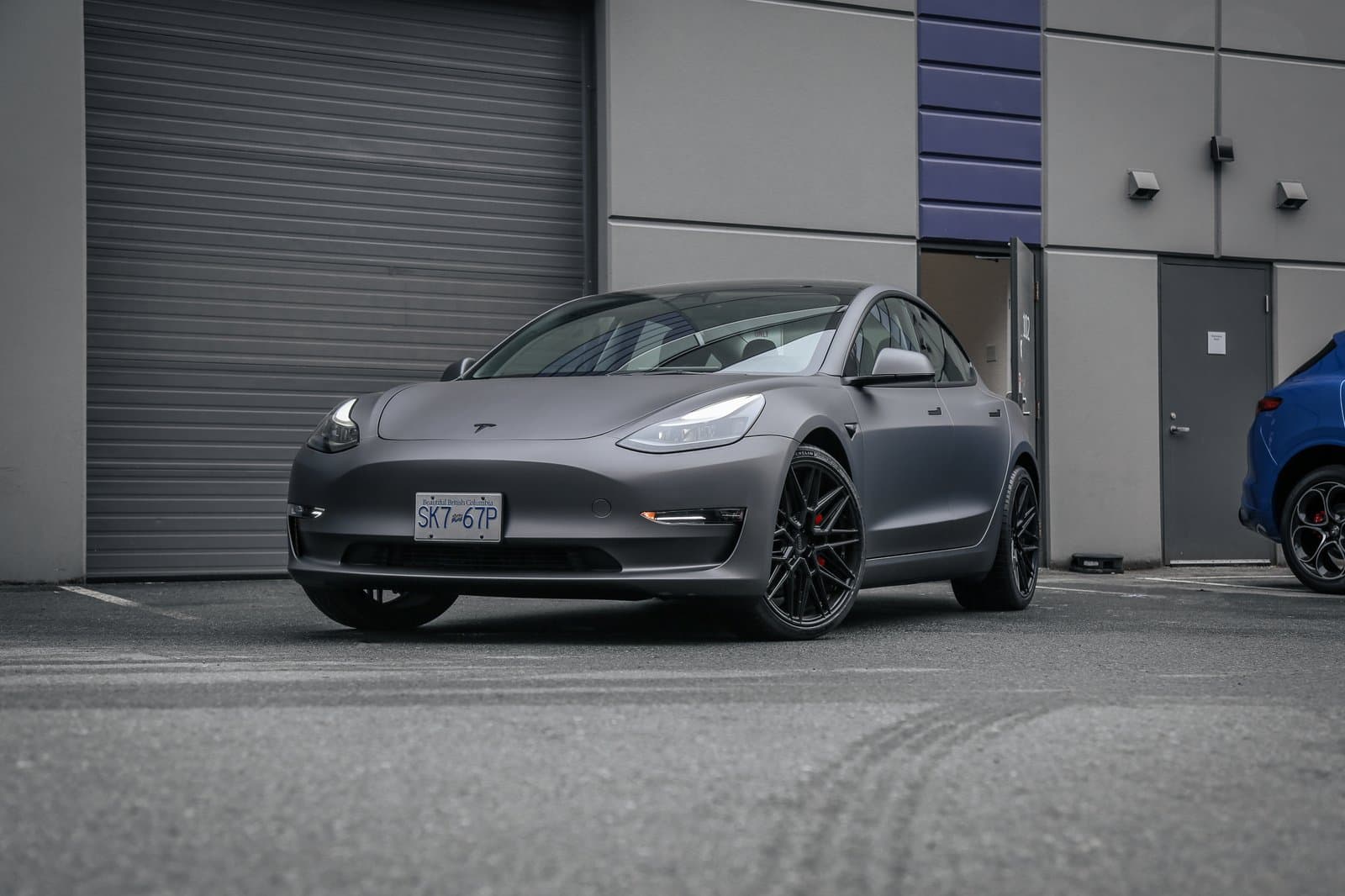
When to Upgrade Your Wheels for Vancouver Roads
Published
Every Vancouver driver has had the moment: you see a set of wheels that look exactly right for your car, and the price is almost reasonable. Before you buy, it is worth knowing what Vancouver roads do to wheels, what the upgrade actually changes, and when the upgrade makes sense versus when it creates new problems.
What Vancouver Roads Do to Wheels
Vancouver road conditions are harder on wheels than most drivers expect. Road salt applied through winter attacks the finish on any wheel that is not specifically designed for corrosive environments. Cast alloy wheels — the factory wheels on most vehicles — use a paint or clear coat over the alloy. That coating degrades through the salt season even when the wheel looks clean between washes.
Potholes are the other major threat. Vancouver's freeze-thaw cycle opens potholes every winter, and they appear on the same streets year after year. A pothole impact on an alloy wheel can crack the barrel, bend the lip, or damage theTPMS sensor. Factory wheels are designed to a price point and are not always robust to the specific abuse of a Vancouver pothole at speed.
When an Aftermarket Wheel Upgrade Makes Sense
The clearest case for upgrading is damage that has already happened. A cracked wheel cannot be safely repaired in most cases — welding alloy wheels is possible but changes the heat treatment of the material and is rarely done to a standard that returns the wheel to its original strength. Replacement is the standard solution, and a replacement aftermarket wheel can often be stronger than the original while being lighter.
The second case is finish durability. Aftermarket wheels from manufacturers like Vossen, Forgiato, and TSW use finishes that are designed to handle road salt and brake dust better than factory coatings. A wheel with a powder coat, a high-quality lacquer, or a painted finish over properly sealed alloy will survive the Vancouver salt season better than a factory clear-coated cast wheel.
The third case is unsprung weight reduction. A lighter wheel reduces the load on the suspension and brake system. On the car you drive to work every day, this means slightly quicker steering response, less brake fade under hard use, and less wear on suspension components. On a performance car, these gains are noticeable. On a daily driver, they are measurable but subtle.
What to Check Before You Buy
The most important specification is bolt pattern — the number of wheel studs and the diameter of the circle they form. This must match your vehicle. A wheel with the wrong bolt pattern cannot be fitted. The second most important is centre bore: the diameter of the hole in the centre of the wheel that seats against the hub. A wheel with a larger centre bore than your hub requires hub-centric rings to centre it properly; a wheel with a smaller bore will not fit at all.
Offset — how far in or out the wheel sits relative to the hub face — determines whether the wheel will rub the suspension components or the bodywork at full lock or under load. A wheel with the wrong offset can be spacers-corrected in some cases, but spacers introduce their own complications: hub-centricity, lug nut length, and load rating.
Load rating matters for heavier vehicles and for vehicles that carry loads regularly. A wheel with a load rating below your vehicle's curb weight plus maximum payload is not safe. This is particularly relevant for SUVs and light trucks — many popular aftermarket wheel designs are engineered for sedans and may not carry the load rating needed for a loaded X5 or full-size SUV.
Wheel Protection After the Upgrade
After installing a new set of wheels, the most important thing you can do is protect them before the first salt season. Road salt works fastest on wheels that have been driven for a few weeks without being washed — the brake dust and road film build a chemically active layer on the wheel surface that accelerates corrosion. Cleaning the wheels with pH-neutral wheel cleaner before the first application of any protective coating gives the coating something to bond to.
For high-end finishes — matte, satin, or polished — a ceramic coating formulated for wheel faces resists brake dust adhesion and makes cleaning significantly easier through the salt season. Wheel faces treated with ceramic coating bead water and resist the salt film that causes pitting on uncoated alloy.
For the lower lip and barrel — the areas most exposed to road debris and salt — PPF on the wheel lip provides impact protection as well as finish protection. This is particularly relevant for Vancouver roads where road debris from construction zones and winter gravel create consistent exposure for the lower barrel of the wheel.
Related project: Tesla Model 3 Vossen HF7 Wheel Upgrade