
Headlights for Vancouver's Dark Winter Roads
Published
December in Vancouver means the sun is barely up by the time the morning commute starts. By 4pm it is gone again. For three months, the city operates in a kind of permanent pre-dawn light that makes visibility on BC roads genuinely difficult — and that is before the rain, the gravel, and the low-angle eastbound glare that blinds you on every downtown on-ramp.
Headlights do more than light up the road ahead of you. On a dark Vancouver winter morning, on a rain-slicked highway, they are part of how other drivers see you. Here is what Vancouver drivers should think about when it comes to headlights in the dark months.
What Makes Vancouver's Winters Particularly Hard on Visibility
Vancouver sits at roughly 49 degrees north latitude — roughly the same as Lyon in France or Munich in Germany. Those cities get cold and dark in winter, but they do not get the same combination of persistent rain, moderate temperatures, and road surface conditions that make visibility on BC roads uniquely challenging through October through February.
The road surface is a significant part of the problem. BC's mountain terrain and seasonal construction mean gravel surfaces appear on highways well into the autumn months — and when it rains on a road still carrying aggregate, the spray pattern and road film that builds up on headlights is particularly severe. This is not a problem Edmonton or Calgary faces to the same degree, because their winters are cold enough that the roads freeze dry.
Low-angle sunlight is the other visibility hazard unique to winter driving in this region. Morning rush hour eastbound commuters on the Port Mann Bridge or Highway 1 approaching Vancouver are driving directly into a low winter sun that sits at an angle the human eye cannot easily handle. Brighter headlights and properly aimed beams make a real difference in those conditions.
How Your Headlights Age and What It Costs You
Even on a relatively new car, UV exposure and road film accumulation gradually reduce the amount of light your headlights actually project onto the road. Over five to eight years, a standard halogen assembly can lose 30 to 50 percent of its rated light output. The lens may still look clear from the driver's seat, but the road ahead is measurably darker.
Oxidized lenses scatter light rather than projecting it cleanly — the beam becomes wider and less intense, reducing your ability to see far ahead and reducing the distance at which oncoming drivers can see you. This is one of the most cost-effective safety upgrades available for an older vehicle.
Upgrading to LED or HID assemblies produces significantly more light output than halogen bulbs in the same housing, and the light colour — closer to daylight — is easier for the human eye to process in wet and dark conditions. LED and HID systems also have a longer service life, which matters in a city where headlights run for months at a time through the winter.
When Headlight Restoration Is the Right Move
If your lenses are oxidized but the light output from the housing is still acceptable, restoration — cutting back the surface layer of the lens and resealing it — can recover most of the original clarity. This is faster and less expensive than a full replacement and is the right call for vehicles that are otherwise in good condition.
For vehicles where the headlight housings are aging, moisture is getting into the sealed unit, or the reflectors inside are degraded, replacement is usually the better long-term solution. Moisture inside a sealed housing is not repairable — the condensation will keep returning and the internal components will continue to degrade.
If you are already planning to protect your paint with PPF or apply ceramic coating to the body panels, getting the headlights sorted at the same time makes practical sense. Bright, clear headlights on a well-protected car are part of the whole picture of a vehicle that holds its value through a Vancouver winter.
PPF— Protect the front end of your car, including headlights, from road film, stone chips, and winter gravel.
Ceramic Coating— A ceramic coating on the headlights helps repel road film and moisture, keeping lenses clearer through the winter months.
Get Your Headlights Ready Before the Dark Months Hit
October is the right time to assess your headlights before the dark season becomes unavoidable. If your lenses are clouding, if your halogen bulbs are dim, or if you are running factory halogen in an older vehicle on dark BC highways, the time to act is before the solstice. Get in touch with JRS Auto Customs to discuss whether restoration, an LED or HID upgrade, or a full housing replacement is the right call for your vehicle and your typical routes.
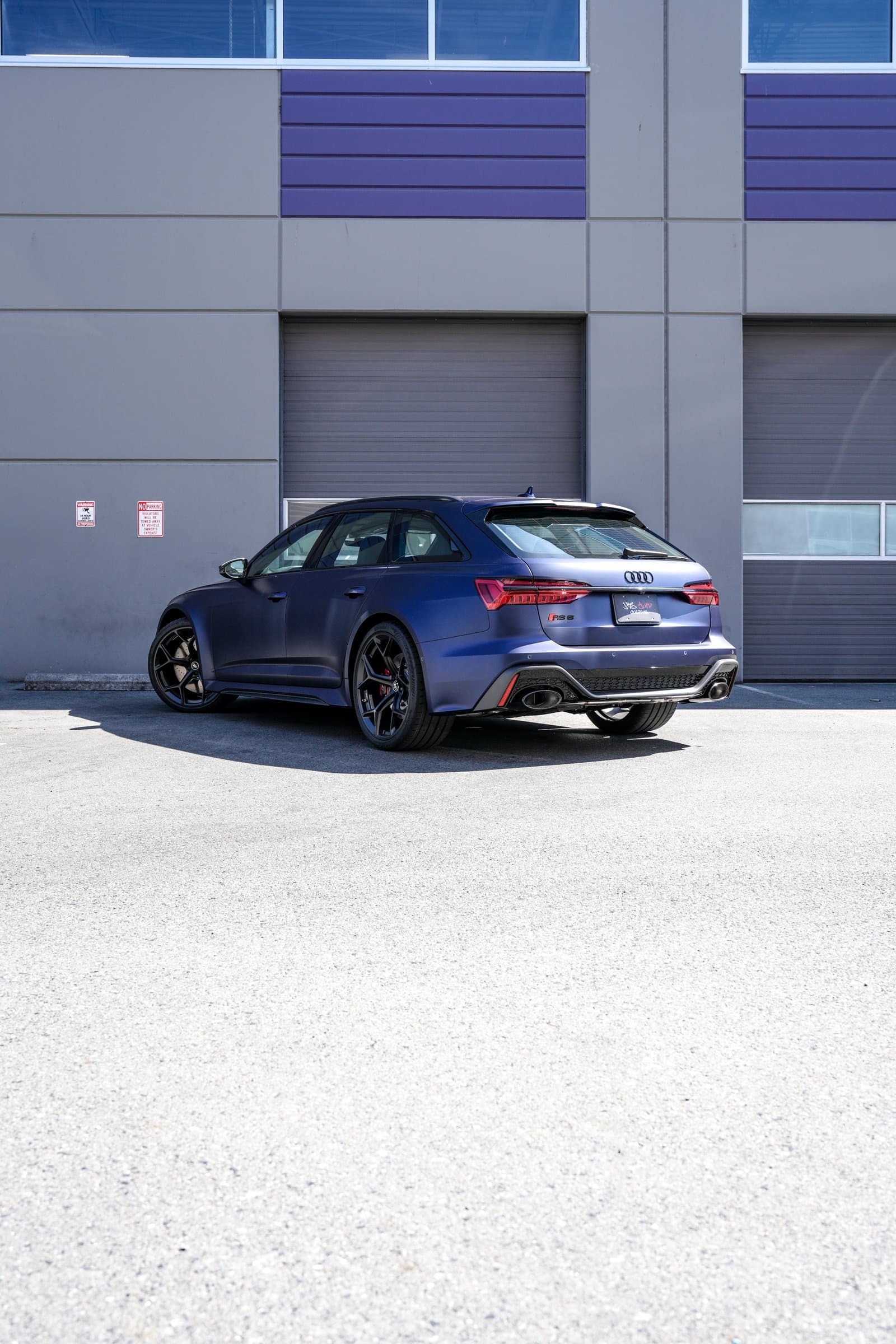
Related project: Audi RS6 Avant Matte Blue PPF