What Vossen Wheels Actually Are — And If You Need Them
Published
Vossen wheels have become one of the most recognisable names on Vancouver's roads. You see them on everything from daily-driver Tesla Model 3s to modified BMW M cars and Performance Audis. But the name Vossen covers several distinct product lines, built through different manufacturing processes, at different price points. Here is what the brand actually offers and whether upgrading to a set makes sense for your car.
What Vossen Is
Vossen is an Austrian wheel manufacturer founded in 2004, specialising in forged and flow-formed wheels for the automotive aftermarket. The company is known for the quality of its fitment engineering — wheels designed to bolt directly onto specific vehicle models without spacers or modification — and for its broad range of styles across different product tiers. Their wheels are a common choice in the Vancouver performance and luxury market precisely because the fitment is usually right first time.
The Three Product Lines
Vossen wheels are divided into three distinct product categories, each made through a different manufacturing process. The process affects the wheel's strength, weight, price, and the kind of driving it is suited for.
Forgelite — Forgelite is the top tier: a fully forged wheel manufactured through multi-directional forging, which compresses the aluminium from multiple angles to produce a wheel that is stronger and lighter than a standard cast wheel. Forgelite wheels are designed primarily for performance applications where strength at minimum weight is the priority. They are the most expensive in the Vossen range.
HF Series — The HF Series — Hybrid Forged — is Vossen's most popular line. These wheels use a flow-formed barrel: the barrel of the wheel is spun and stretched at high temperature, which compresses the aluminium and increases its density without the cost of full forging. The wheel face, however, is individually machined from a forging, giving the design flexibility of a cast wheel combined with the strength of a forged barrel. This makes the HF Series the most common choice for a performance daily driver — the process produces a wheel that is lighter and stronger than cast without the full cost of a forged wheel.
Cast Wheels — Vossen also produces a range of cast wheels, which use a traditional moulding process. These are the most affordable tier in the Vossen range and are designed for drivers who want the Vossen fitment and style quality without the performance upgrade in wheel construction.
Why Vancouver Roads Make Wheel Choice More Important
Vancouver's road conditions are harder on wheels than many drivers appreciate. Winter road salt is corrosive to aluminium, particularly if the wheel finish is not properly maintained. Potholes and road surface irregularities on Metro Vancouver roads — particularly on arterial routes through Burnaby, Surrey, and the North Shore — can cause impact damage to wheels that may not be immediately visible. And street parking, which is a practical reality for most Vancouver residents, introduces curb rash as a genuine ongoing risk for anyone who parks tight.
A stronger wheel — whether hybrid forged or fully forged — is more resistant to impact damage than a standard cast wheel. For a car driven daily through Vancouver, this is not a trivial consideration. The cost of repairing a cracked or dented wheel can approach or exceed the price difference between a cast and a hybrid forged wheel.
What You Should Consider Before Upgrading
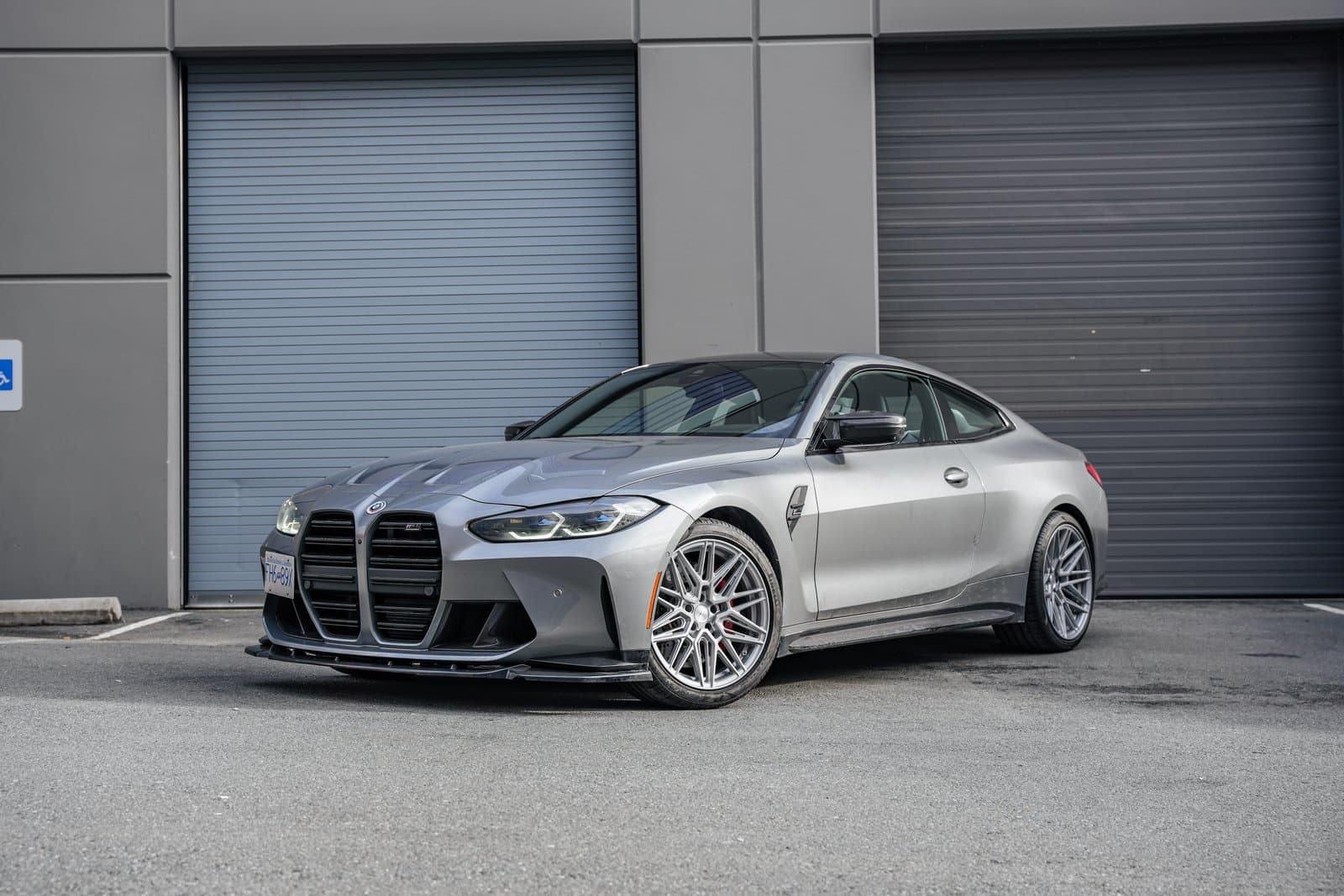
Before choosing a wheel, consider how the car is used. A set of 20-inch HF7 wheels on a Tesla Model 3 that spends most of its time on smooth Highway 1 commutes will perform differently from the same wheel size on a BMW M4 driven aggressively on Sea-to-Sky weekend runs. Tyre choice matters alongside wheel choice: a larger wheel with a lower profile tyre reduces sidewall height, which affects ride comfort and the vulnerability of the wheel face to curb impact. A Tyre Pressure Monitoring System sensor must be retained or replaced with the correct unit for the new wheel — something that should be confirmed at the time of fitment.
For most Vancouver daily drivers, the HF Series represents the most practical balance: lighter and stronger than cast, more affordable than Forgelite, and available in a wide range of sizes and offsets to match most vehicle applications. Forgelite makes the most sense for track-day vehicles, high-performance builds where weight reduction is a specific goal, or owners who want the absolute best wheel available regardless of cost.
Whether the Upgrade Is Worth It for Your Car
A wheel upgrade is worth it when the wheels match how the car is actually used. For a daily driver in Vancouver that is also used for longer highway trips and occasional mountain drives, the HF Series is a meaningful upgrade from factory wheels: better fitment, lighter weight, improved aesthetics, and more resistance to the impact conditions Vancouver roads produce. For a car that is primarily city-driven on short urban trips, the calculation shifts — factory wheels on most modern vehicles are well-engineered for that kind of use, and the upgrade cost may not translate into a proportional real-world benefit.
JRS Auto Customs in Vancouver has installed Vossen wheels on vehicles across Metro Vancouver since 2010, from daily drivers to performance builds. If you are considering a wheel upgrade for your car, get in touch to discuss the right choice for your vehicle and usage. See Vossen wheel options and fitments at JRS Auto Customs.
Related project: BMW M4 G82 on Vossen HF7 Hybrid Forged Wheels