
What Is Ceramic Coating and Is It Worth It for Your Car
Published
Ceramic coating is probably the most discussed and most misunderstood service in the car care industry. You have seen the videos of water beading off a treated surface, the durability claims, and the price tags that can run into the thousands. But what does it actually do, and who is it actually worth it for? JRS Auto Customs applies ceramic coating to cars across Vancouver, and this is the conversation we have with customers before they commit.
What Ceramic Coating Actually Is
At its core, ceramic coating is a liquid polymer that bonds chemically to your car paint. The most common formulation uses silicon dioxide, SiO2, the same compound found in glass and quartz. When applied to properly prepared paint, it cures into a hard, semi-permanent layer that is far more durable than traditional wax or sealant. Wax sits on the surface and degrades within weeks. Ceramic coating bonds at a molecular level and, when properly applied, can last years rather than weeks. The coating changes how the paint interacts with water, contaminants, and UV light. Water beads and slides off; contaminants have a harder time bonding to the surface; UV is partially blocked from reaching the clear coat directly. This is not magic — it is chemistry.
What It Can and Cannot Do
Ceramic coating is not a force field. It will not prevent rock chips from highway driving, and it will not stop scratches from a door opening against your panel or a careless wash with a dirty mitt. It takes the first hit from minor contamination, but deeper scratches that reach the paint require colour correction to address. Many customers who have had ceramic coating applied and still found scratches on their car misunderstand what the coating is designed to do. It is not a replacement for PPF in high-impact areas — for stone chips and serious abrasion, PPF is still necessary. But in daily driving, ceramic coating meaningfully reduces the occurrence of minor swirl marks and wash-induced scratches.
Ceramic coating is also not something you can replicate with a consumer-grade product. There are many DIY coatings on the market that claim professional-grade results, but as in any industry, quality and results vary significantly. Professional-grade application involves proper paint correction, surface preparation, controlled environment, and correct application technique. The preparation work — not the product alone — determines the final bond and longevity.
Who Is Ceramic Coating Actually Worth It For
For some people, ceramic coating is absolutely worth it. For others, it is not. The biggest beneficiaries are cars that are parked outdoors regularly and cleaned routinely. If you have a daily driver that spends most of its time outside, ceramic coating makes every wash easier, reduces the accumulation of minor road scratches, and maintains the paint's gloss over time. If your car lives in a garage and only comes out on weekends, the investment may be harder to justify unless the vehicle has custom paint worth protecting.
For Vancouver specifically, there are a few relevant considerations. Nine months of rain a year means the hydrophobic properties are genuinely useful here — water does not sit on the surface and form water spots, it runs off. Summer UV, while not as intense as desert climates, is still enough to accelerate clear coat degradation over time. Winter road salt does not degrade the coating itself, but it does accelerate aging of the paint around the coating edges — which is why combining ceramic coating with PPF in high-impact areas is a practical approach for Vancouver drivers.
JRS Auto Customs applies Gyeon Mohs EVO ceramic coating to vehicles across Vancouver. If you are wondering whether ceramic coating makes sense for your car, your parking situation, and your maintenance habits, see our ceramic coating services and get in touch to start the conversation.
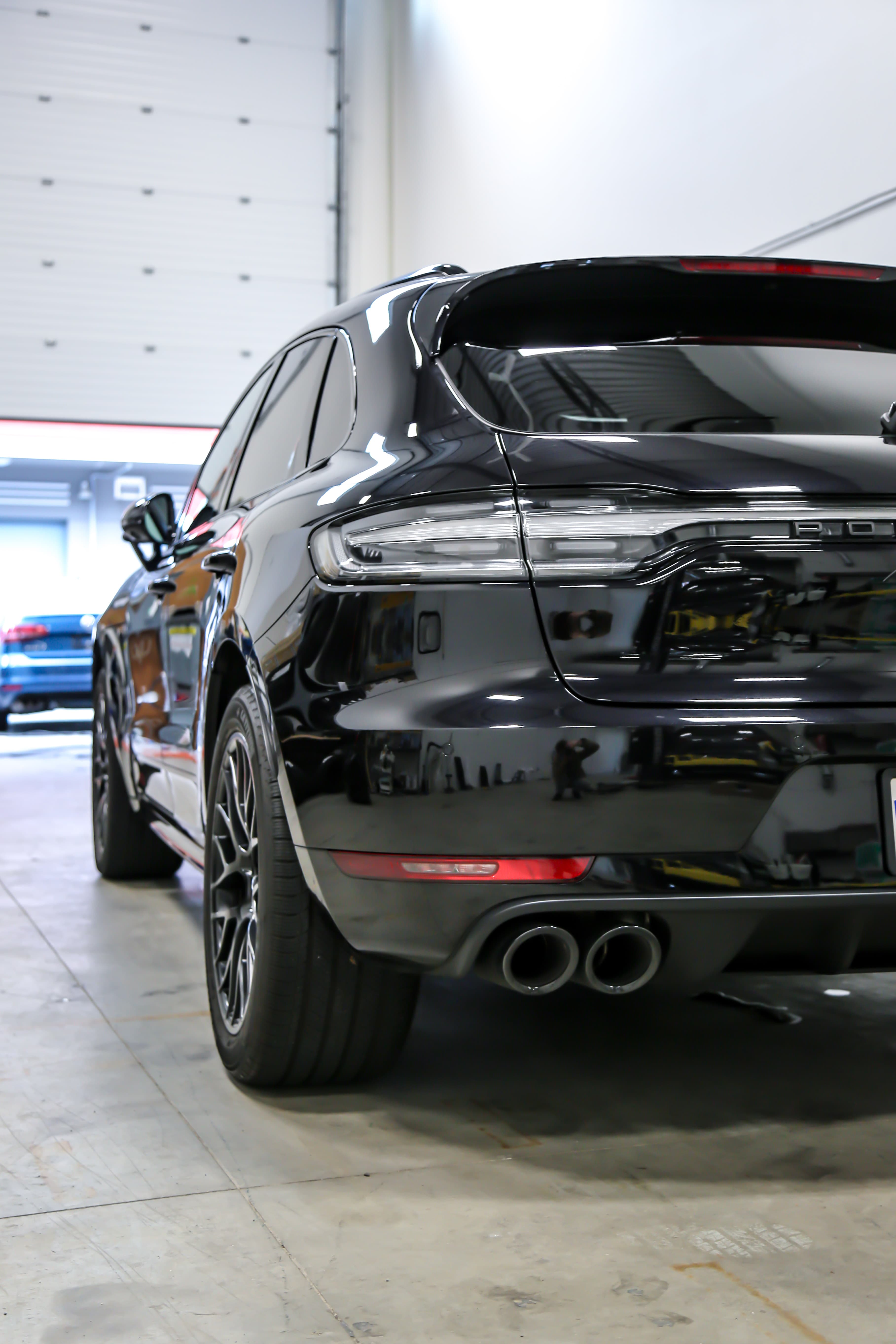
Related project: 2020 Porsche Macan GTS | GYEON MOHS EVO Ceramic Coating