Should Your Wheels Match Your Wrap Colour?
Published
Almost every colour change wrap looks finished the moment the film leaves the shop, and almost every one of them looks slightly unfinished the first time it pulls into a parking space next to a car with a different set of wheels. That gap between the body and the rim is where most of these builds get their final decision made, and it is a decision that is easier to get right before the wrap goes on than after.
Matching is not the only goal
There is a persistent idea that a wrapped car should have its wheels painted to match the body. It sounds like the obvious choice, and for a lot of builds it is the wrong one. What you actually see on a finished car is a relationship between two surfaces, and there are more ways for that relationship to work than one.
A wheel in the same colour as the body reads as a single continuous shape. The car looks lower, longer and more deliberately designed, because the eye stops registering the rim as a separate object. The matching wheels essentially disappear into the silhouette. That is a real effect, and for some cars and some colours it is exactly the look people are after.
The opposite choice works just as well. Dark wheels against a lighter body draw the eye downward and outward, away from the centre of the car. On a light wrap, the rim becomes a graphic element — the car reads as having a deliberate, athletic stance rather than a smoothed-over one. A dark wheel against a dark body can also work, provided the finish differs enough to keep the shapes from merging.
Why the finish matters more than the colour
Two wheels in the same colour can look completely different depending on how they finish. A satin wheel and a gloss wheel in the same colour are not the same wheel. Satin absorbs light and reads softer, closer to the body than gloss does. Gloss catches light and draws attention to the shape of the rim itself.
That difference becomes the deciding factor when you are working with a matte or satin body. A glossy wheel next to a matte body is a strong contrast, and it can look like a deliberate choice or it can look like the car was half-finished. A satin wheel against a matte body reads as one idea carried through. Choosing the wheel finish together with the wrap finish is what makes a build look intentional rather than assembled from parts.
The two combinations JRS sees most
The first is a monochrome build: body and wheels in one colour, with the wheels refinished to match. It is the version that photographs best and it suits cars with strong, continuous lines — a coupe, a wagon, a sedan with a clean shoulder. On a tall crossover with a lot of separate surfaces, the same approach can look flat, because there is not much continuous surface for the eye to follow.
The second is a two-tone build, where the body is wrapped in one colour and the wheels are refinished black or dark. This one is more forgiving, because the contrast is what is carrying the design, and it is the combination that tends to age best. It is a combination that sits comfortably on the taller shapes too, because the contrast is doing the work rather than the body line.
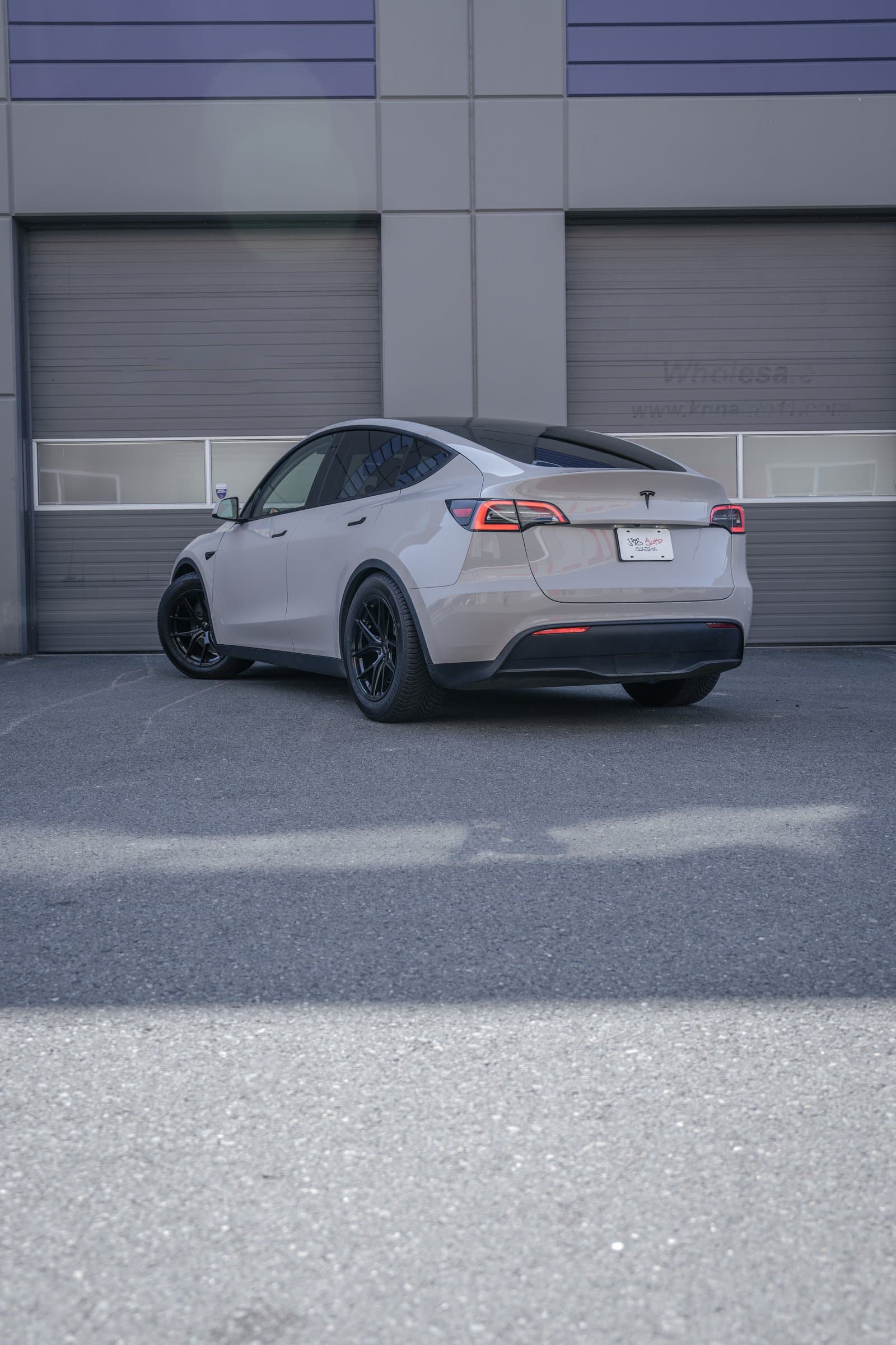
The Tesla Model Y in chalk grey with black wheels is that second approach. The wrap is a muted, chalky grey and the wheels are refinished black, and the two together give the car a coherent, single-tone read from body to rim without the wheel colour having to literally match the film.
Refinishing versus replacing
If the existing wheels are a good set, refinishing them is usually the smarter move. Wheel repair and refinishing is a service JRS provides — curb rash repair and refinishing on wheels that have taken a hit — and it turns a set of used wheels into a colour you actually wanted. It also means the spoke design, the offset and the fitment you already know works all stay exactly as they were.
Replacing the wheels entirely is worth it when the condition is the problem, not the colour. A wheel that is cracked, badly corroded, or bent past repair is not a refinishing candidate no matter how good it looks in a photograph. In that case you are buying wheels, and the colour is a decision you make while you are choosing the size and the offset anyway.
What to settle before the wrap goes on
The order of operations matters here. Once a car is wrapped, changing the wheel colour means removing the wheels again, and that is avoidable work. So settle the wheel decision first: what the wheels look like now, what colour you want them, and whether that means refinishing or replacing.
Then bring the two into the same conversation. A shop that is fitting the wrap should know what the wheels are going to be doing, because a wrap installed around a particular wheel and brake setup can differ in how the film is trimmed at the arch and the arch lip. Getting the wheel plan in place before the car is wrapped keeps the job to one visit rather than two.
JRS handles colour change wraps and wheel refinishing in the same shop, so both halves of the decision can be looked at on the same car. The colour change service covers the film options, finishes and installation, and the wheels service covers the fitment, repair and refinishing side. For a car that has just been protected, a maintenance plan keeps a satin or gloss finish where you left it.
Related project: Tesla Model Y — Chalk Grey Color Change with Black Wheels