What Your Wheel Upgrade Changes About Your Car Geometry
Published
A wheel upgrade is one of the most visible modifications you can make to a vehicle. But the change that matters most is not the one you see in photos: it is what happens to your alignment, tyre wear patterns, and suspension geometry the moment the new wheels and tyres are fitted. In Vancouver conditions, these changes matter more than in drier climates.
What Actually Changes When You Change Wheel Offset
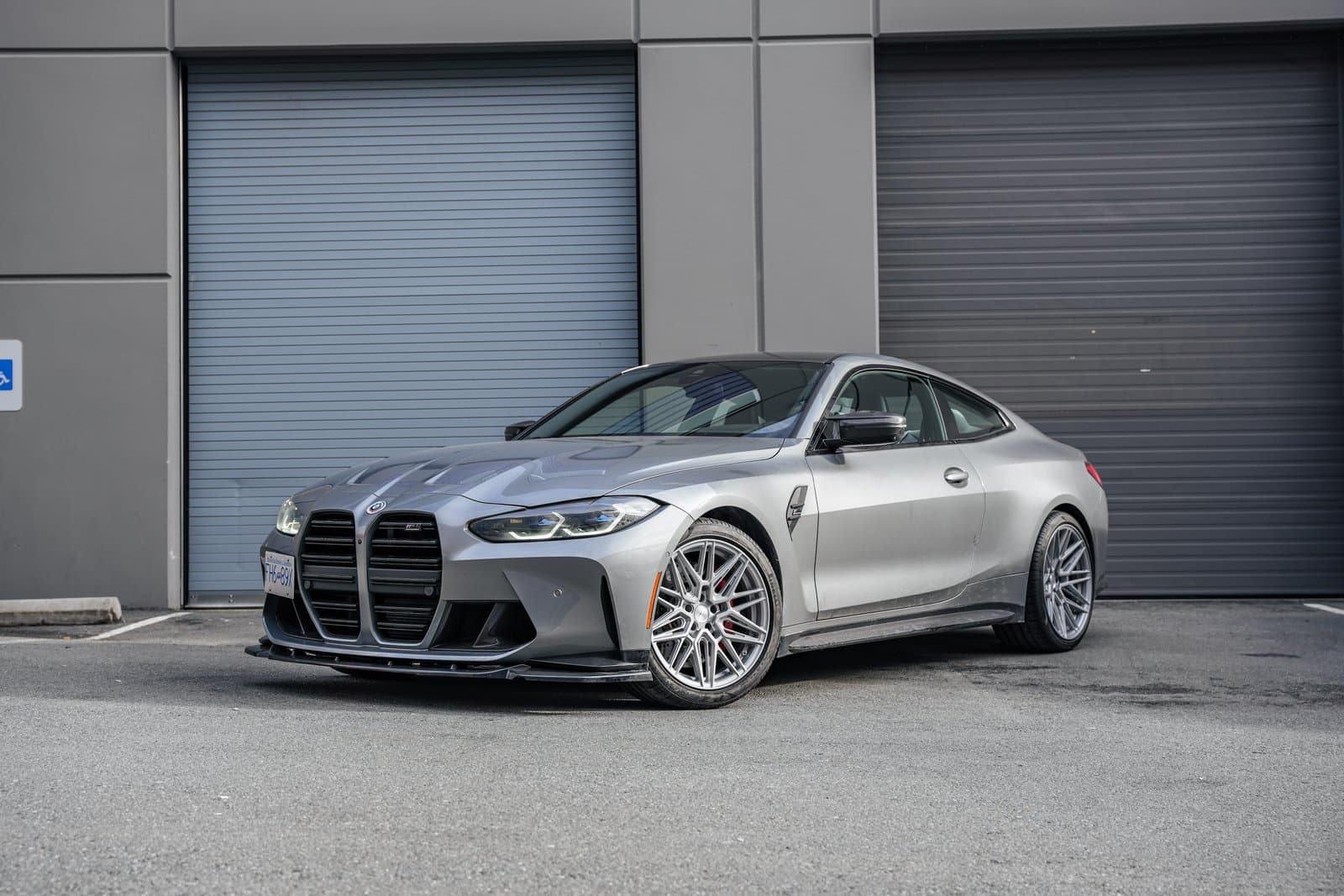
Wheel offset determines where the tyre sits relative to the suspension knuckle. A lower offset pushes the tyre outwards, increasing the scrub radius and changing how steering self-centres and how loads transfer through the suspension. On a BMW M4 or a Porsche 911, which have inherently stiff suspension geometry, offset changes are felt more directly than on a softer SUV chassis.
On a Vancouver road with ruts, drainage channels, and the camber built into most street surfaces, a changed scrub radius affects how the car tracks through corners and whether it pulls to one side on a crowned road. This is not dangerous with a well-chosen offset, but it is noticeable and it changes tyre wear patterns, usually increasing wear on the shoulder of the tyre on the side opposite to the direction of pull.
Why You Need an Alignment After Any Wheel Upgrade
An alignment after a wheel upgrade is not optional. Even if the new wheels have the same offset as the originals, the act of removing and refitting the wheel can introduce play in the lug nuts and affect suspension bushings that were previously seated. More significantly, if the new wheels have a different offset, the vehicle camber and toe angles will be different from factory spec even if no mechanical changes have been made to the suspension.
Vancouver roads are particularly hard on alignment. The combination of rutted surfaces, drainage channels running across intersections, and camber built into road surfaces means alignment out of spec has a more immediate effect on tyre wear here than on smooth flat roads. An alignment that is two degrees out of spec will show as uneven shoulder wear within 5,000 kilometres on local roads.
After a wheel upgrade, a full laser alignment should be performed. This measures all four corners independently and provides documentation that is useful when the vehicle is sold or when assessing whether a tyre wear issue is alignment-related or caused by something else.
Tyre Wear Patterns That Tell You Something Is Out of Spec
Shoulder wear on the inner or outer edge of a tyre usually indicates camber is out of spec. A sawtooth or feathering pattern across the tyre face usually indicates toe is out. Cupped wear, a rippled pattern around the tyre circumference, usually indicates a damaged or worn suspension component or a wheel balance issue.
If you are running a lower offset wheel on a performance vehicle, tyre wear will migrate toward the outer shoulder more quickly because the changed scrub radius and camber geometry under cornering load is amplified with a wider wheel and lower offset. Tyre pressure management becomes more important, not less: running the correct cold pressure is essential to prevent uneven shoulder wear from underinflation.
Camber and Seasonal Changes After a Wheel Upgrade in Vancouver
Vancouver temperature range from summer to winter can be as large as 30 degrees Celsius. This changes tyre pressure noticeably, which changes the contact patch and the effective camber of the axle under load. On a vehicle with upgraded wheels and non-factory offset, this seasonal pressure shift interacts with the changed geometry in ways that do not affect a stock vehicle as directly. Checking cold tyre pressure monthly and adjusting for seasonal temperature changes is more important on a modified vehicle than on a stock one.
If the upgraded wheels are a different width than the originals, the contact patch shape changes. A wider wheel with a lower offset on a front-wheel-drive or all-wheel-drive vehicle distributes the load differently across the tyre face. This is usually manageable with correct pressure and alignment, but it is worth monitoring in the first few thousand kilometres after an upgrade.
JRS Auto Customs performs wheel installations and advises on alignment requirements after wheel upgrades. The team can arrange a post-upgrade laser alignment at a trusted local specialist and advise on tyre pressure settings for the new wheel and tyre combination. Visit the
wheel services pageon the JRS Auto Customs website to learn more or discuss your upgrade requirements.
Related project: BMW M4 G82 on Vossen HF7 Hybrid Forged Wheels