
Which Brake Pads Actually Suit Vancouver's Climate?
Published
Vancouver's rain, road salt and the city's particular mix of steep hills and stop-and-go traffic put brake pads through more than most drivers expect. The pads that came with your car from the factory are often a broad compromise - and in a climate like this one, that compromise runs out of road faster than you might think.
The three main pad compounds and what they do
Most OE brake pads are organic: fibres and binders pressed together, quiet, cheap and smooth on a test drive. They do not hold up well in sustained wet conditions and wear faster when they stay damp. In Vancouver, where the car gets rained on, driven a few kilometres, parked, and left damp overnight - that cycle repeating for months - organic pads feel the strain.
Semi-metallic pads contain a high proportion of metal fibres, usually steel or copper, bonded into the friction material. They conduct heat away from the contact surface more effectively, handling repeated hard braking better. The tradeoff is noise and rotor wear: they tend to hum or squeal in everyday driving. For someone who drives steep descents regularly or wants stronger performance feel, that tradeoff is worth it.
Ceramic pads use a ceramic fibre compound with small amounts of non-ferrous metal. They run quieter, produce far less brake dust (which matters on Vancouver's light-coloured alloy wheels), and handle wet conditions well. They cost the most of the three options and do not brake as aggressively in extreme heat - but extreme heat is rarely a concern for street driving in the Lower Mainland.
Why Vancouver's conditions push pads harder
Rain is the biggest single factor. Water on the brake disc reduces friction at the pad-rotor surface, and organic pads take longer to recover full braking force after the rotor clears the water film. In dense traffic on the Lions Gate Bridge approach or the Ironworkers Memorial Bridge, that fraction of a second matters.
Road salt and sand - applied through most North Shore and Tri-Cities intersections - settle into the wheel arch against the brake caliper housing. Salt accelerates corrosion on bare metal components. Semi-metallic pads with stainless steel backing plates handle this better than cheaper organic pads on painted steel.
Temperature swings between November and February catch a lot of drivers out. A morning frost melts to wet roads, the car sits in cold wet traffic, then the sun comes out - all within one commute. Semi-metallic pads tolerate that range better. Organic pads that never fully heat up can glaze over, reducing friction rather than maintaining it.
Matching the pad to your driving pattern
For most daily drivers - suburban commutes, school runs, errands - ceramic pads are the most practical upgrade over factory organic pads. Quieter, less wheel dust, better wet-weather recovery, and a lifespan typically 50 to 60 percent longer.
If you regularly drive the Sea to Sky, Highway 1 toward Hope, or any sustained downhill route, semi-metallic or high-friction organic pads are worth the extra noise. Consistent heat management through long braking intervals is what matters there.
Heavy SUV and truck owners in Vancouver will find that higher curb weight punishes factory organic pads faster. Upgrading to ceramic or semi-metallic as a first maintenance item after purchase is a common and sensible choice.
Pairing pads with the right rotors
Whatever compound you choose, the rotors must match. Semi-metallic pads wear cast iron rotors faster than ceramic compounds do. If you switch from organic to semi-metallic, budget for rotor replacement around 60,000 kilometres rather than the 80,000 you might expect from factory pads. And do not mix pad compounds without checking the rotor surface - a pad formulated for ceramic-rotor surfaces will not bite properly on a standard steel rotor.
Book a brake service appointment with JRS Auto Customs to review your current setup
Vancouver drivers have more variables to manage than most cities. The pad that works for a car in Phoenix is not the one that works here. Understanding what is on your car right now - and what it is rated for - means fewer surprises at the next maintenance interval.
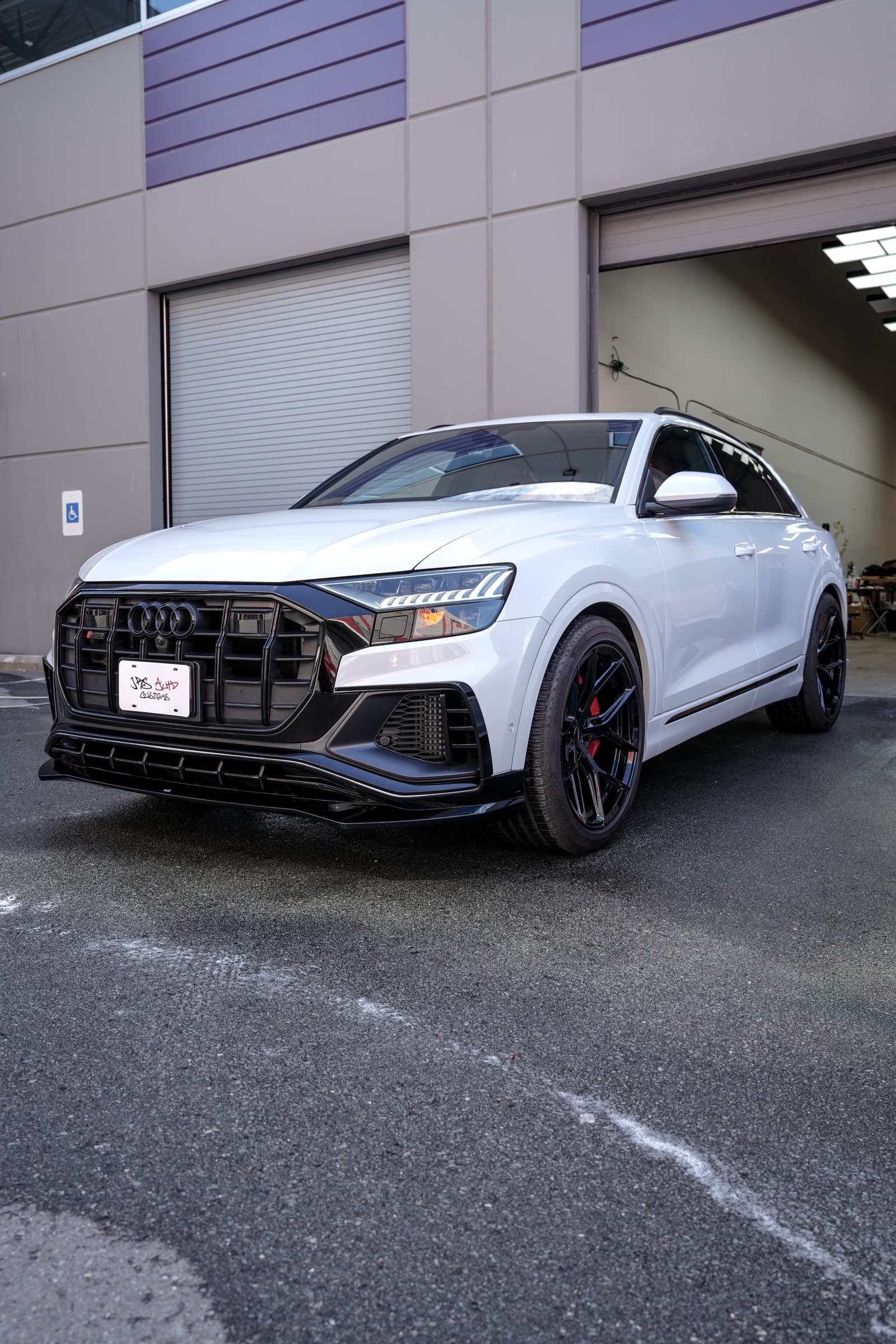
Related project: Audi SQ8 ABT Body Kit & Vossen HF5 Wheels