
Window Film and Interior Heat for Vancouver Drivers
Published
Vancouver does not have the reputation of Phoenix or Miami for summer heat, but the interior of a car parked in direct sun in Vancouver on a clear July afternoon can reach temperatures that surprise even long-term residents. The combination of glass greenhouse effect, UV exposure, and increasingly warm summer stretches means your dashboard, seats, and trim are absorbing more heat and UV radiation than most owners realise. Window film is one of the most effective ways to reduce that exposure — and the differences between film types matter more than most people expect before they get quotes.
Why Vancouver Sun Is Harder on Your Interior Than It Looks
Standard automotive glass blocks a portion of UVB rays but allows most UVA radiation through, and UVA is the wavelength primarily responsible for material degradation. Over a single summer of regular parking in sun, the cumulative exposure causes measurable fading and cracking in dashboard materials, steering wheel leather, and seat surfaces. The damage is incremental and invisible on a day-to-day basis, which is why most owners do not notice it until a parked car interior looks noticeably different from the previous year.
Vancouver sits at a latitude where summer sun angle is high enough to be genuinely strong even through cloud gaps. The city also has extended daylight hours through June and July that compound the exposure window. Vehicles parked on south or west-facing streets in areas like Kitsilano, Kerrisdale, or downtown surface streets accumulate the most exposure per day.
How Window Film Reduces Interior Temperature
Window film works by reflecting and absorbing solar energy before it enters the cabin through the glass. The heat you feel inside a parked car on a sunny day is primarily infrared radiation passing through the windows. Film with a high infrared rejection rating reduces how much of that energy gets through, which directly reduces peak interior temperature. A car with good ceramic or metallic film can be meaningfully cooler to enter after a day in the sun compared to the same car with no film.
UV rejection is separate from heat rejection and equally important for interior preservation. Quality films block between 99 and 100 percent of UVA and UVB rays. The benefit to your dashboard, seats, and steering wheel is cumulative — a film that removes 99 percent of UV every time the car is parked will significantly slow the fading process over the vehicle lifetime.
The Three Main Types of Window Film
Dyed film is the entry-level option: an absorbed dye layer reduces visible light transmission and provides modest heat rejection. It does not reflect infrared energy effectively and will fade over a few years, but it is the most affordable path to privacy and some UV protection. It is not the right choice if heat reduction is the priority.
Metallic film uses tiny metal particles embedded in the film to reflect infrared radiation. It provides substantially better heat rejection than dyed film and is more durable over time. The trade-off is potential interference with GPS, cell signal, and radio reception — a consideration that matters more in newer vehicles with more wireless systems. On older cars without advanced driver assistance systems, metallic film is often the best value.
Ceramic film uses ceramic nanoparticle technology rather than metal or dye and blocks infrared heat and UV without any metallic content. It does not interfere with wireless signals, maintains its appearance over time without fading, and provides the highest level of heat rejection among current consumer film technologies. It is the premium option and the choice most often recommended for vehicles with ADAS sensors, modern infotainment systems, or where long-term interior preservation is the goal.
What Actually Matters in Installation
Film type matters, but installation quality matters more in practice. A perfectly specified ceramic film installed with contamination under the film or with edge lifting will look worse and perform worse than a well-installed dyed film. The key variables are surface preparation — the glass must be completely decontaminated before the film is applied — and the precision of the cut around rear cameras, rain sensors, and ADAS cameras. A sloppy cut that allows water ingress is a common sign of a rushed installation.
On newer vehicles with cameras behind the windscreen, rain sensors, and ADAS cameras, film installation requires knowledge of the sensor locations and appropriate film selection. Not all films are compatible with all vehicle sensor configurations. JRS Auto Customs in Vancouver can advise on what film works with your specific vehicle and trim level before you commit.
Related Services at JRS Auto Customs
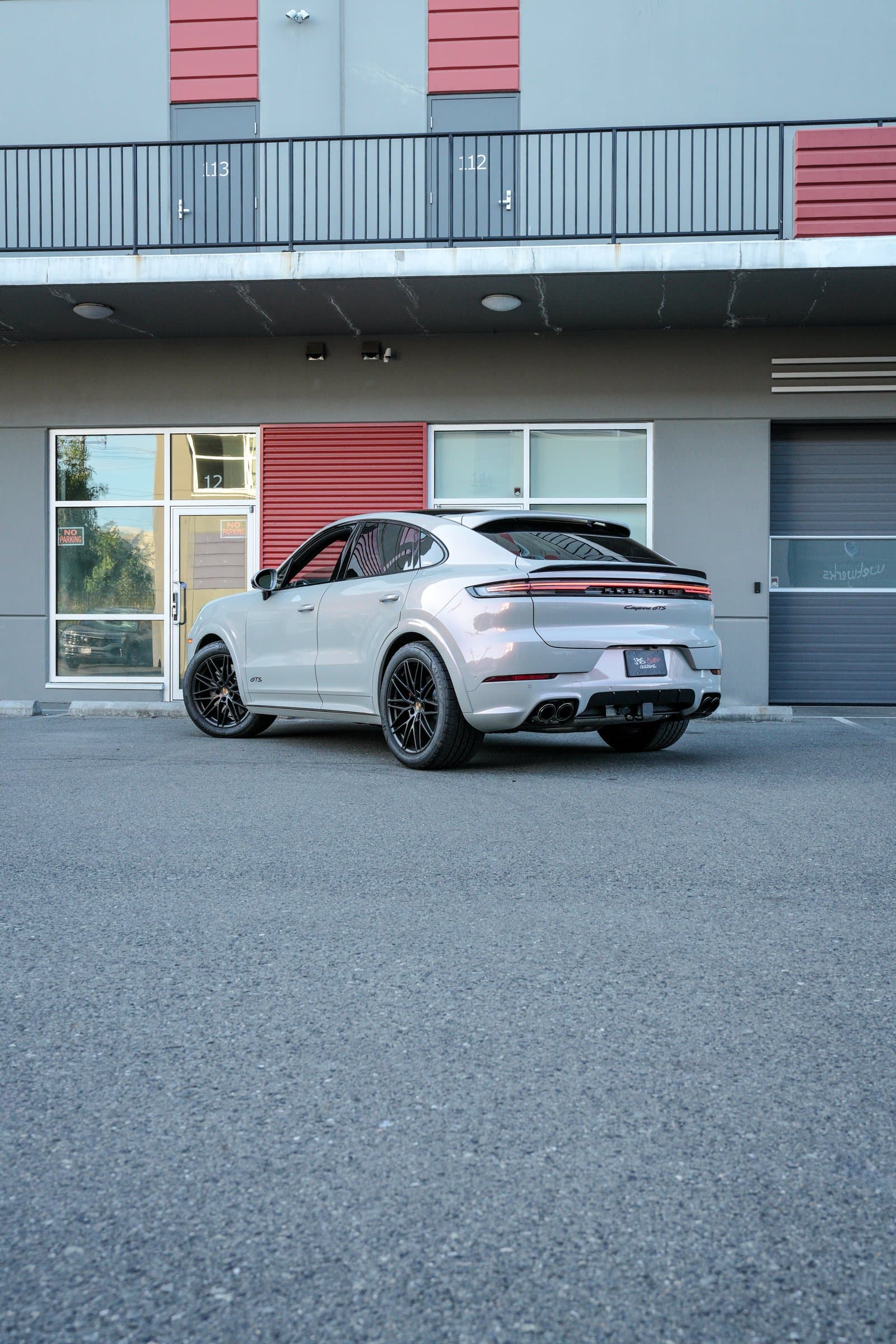
See our PPF and colour change work in the Porsche Cayenne GTS Red Diamond PPF project portfolio. For window tint and film installation, visit JRS Auto Customs at our Vancouver shop to discuss what film type suits your vehicle and how installation interacts with your ADAS sensors. Learn more: PPF installation, ceramic coating, and colour change wraps.
Related project: Porsche Cayenne GTS Red Diamond PPF Wrap