
Winter Tires for Vancouver: What Actually Works on BC Roads
Published
BC's winter tire law does not tell you what kind of winter tire to buy — only that you need one with the mountain/snowflake symbol by October 1st. What the law does not cover is whether the tire that meets the legal minimum is actually the right tire for the roads you drive, or whether spending more gets you something meaningfully better. The answer to both is more complicated than the sticker suggests.
The Legal Minimum vs. What Actually Works on North Shore Roads
The mountain-and-snowflake symbol means the tire has passed the industry grip test in standardized conditions. That test is conducted on packed snow on a flat incline — which is a useful baseline but not representative of the range of conditions Vancouver drivers actually encounter. Ice on the Lions Gate Bridge deck, wet leaves on Marine Drive, black ice on the Upper Levels Highway in the early morning, and the compressed snow ruts on Cypress Bowl Road are all different from packed snow on a test incline, and they all require different things from a tire.
All-season tires carry the M+S (mud and snow) marking and are legal in BC. They perform acceptably in mild winter conditions but are a compromise tire — designed for year-round use in climates that do not get severe winters. The compound hardens significantly below about seven degrees Celsius, which is roughly what Vancouver sees on a lot of winter mornings. A dedicated winter tire uses a different compound that stays flexible in cold conditions, and a different tread pattern designed to evacuate slush and maintain contact with the road surface under load.
Performance Winter Tires vs. Touring Winter Tires
Winter tires split into two broad categories that are worth understanding before you buy. Touring winter tires — the Blizzak, X-Ice, and similar lines — prioritise grip on ice and snow. The compound is softer, the tread pattern is designed for maximum edge contact, and the handling characteristics are tuned for traction rather than responsiveness. They are the right choice for the majority of Vancouver drivers, especially anyone commuting on the North Shore roads or driving Highway 1 regularly.
Performance winter tires — the run-flat and sport-oriented variants from Michelin, Pirelli, and Continental — prioritise maintaining the vehicle's handling character in cold conditions. They use a compound that balances winter grip with the response and feedback drivers of performance vehicles expect. They generally do not perform as well as touring winter tires in deep snow or severe ice, but for drivers who use their performance car year-round and want to preserve the driving experience rather than simply maximise traction, they are the correct choice.
Run-Flat Tires: When They Make Sense and When They Do Not
Run-flat tires have reinforced sidewalls that allow you to continue driving for a limited distance after a puncture — typically up to 80 km at reduced speed. On vehicles without a spare tyre, this is the only option that allows you to continue after a flat without being stranded. On vehicles equipped with a TPMS warning light, the system will alert you immediately if a pressure loss occurs.
The trade-off is ride quality and handling feel. Run-flat compounds are harder than equivalent standard tires, which means the ride is generally firmer and the tyre communicates less feedback through the steering. On a daily-driven performance car, this is a noticeable compromise. If your vehicle came with run-flats from the factory and you are replacing them, switching to standard winter tyres is a legitimate option as long as you carry a spare or run-flat conversion kit — but it is a decision worth making with full awareness of the consequences.
What Vancouver's Road Surfaces Actually Demand
Vancouver's most demanding driving surfaces are not snow-covered mountain passes — they are wet city streets and cold highway surfaces. Wet traction is a function of the tyre's ability to evacuate water from the contact patch. Tread depth matters here: a winter tyre with 8/32" of tread performs significantly better in wet conditions than one worn to 4/32". When winter tyres are worn past around 5/32", the siping — the small cuts in the tread blocks that wick water away from the contact surface — becomes less effective, and the tyre's wet-weather performance degrades to below that of a good all-season tyre at full tread depth.
The practical implication: if your winter tyres are more than four to five years old, the compound has oxidised even if the tread depth looks acceptable, and the performance in cold and wet conditions has degraded. Old winter tyres look fine but do not perform like new ones. This is especially relevant for vehicles that are stored or do low mileage — the tyre age is not reflected in tread wear.
Making the Right Call Before the First Cold Snap
The October 1st deadline is not the right time to buy winter tyres — it is the right time to have them fitted. Tyre shops are busy in October and November, and availability on popular sizes narrows. Buying in September and booking the fitment for late September or early October means you get better availability, often better pricing, and the peace of mind of knowing your car is ready before the first cold snap arrives on the North Shore. JRS handles winter tyre fitting and storage as part of its service offering. Enquire about tyre fitting and storage to have your winter tyre setup organised before the season arrives.
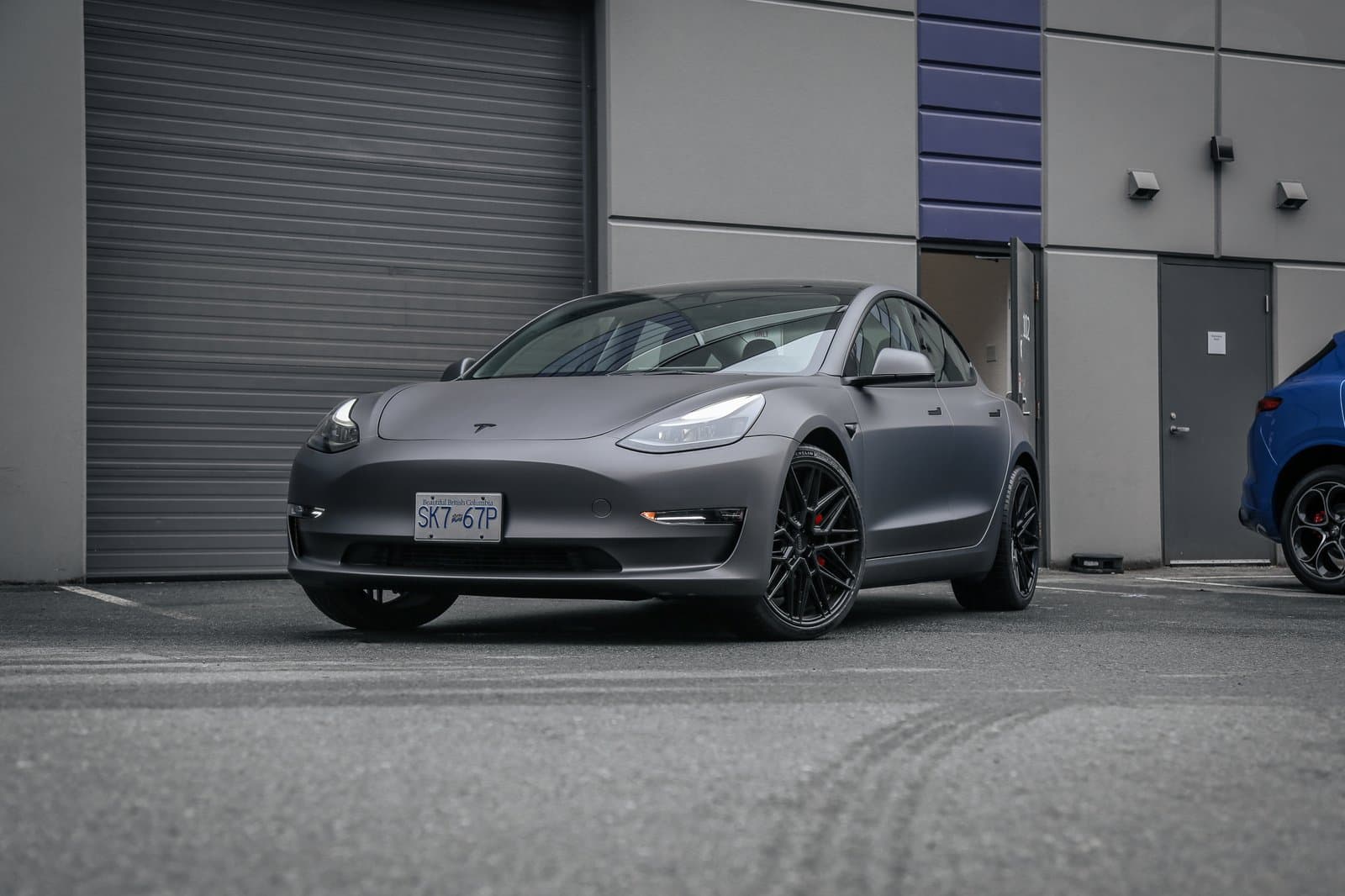
Related project: Tesla Model 3 Vossen HF7 Wheel Upgrade