
Wrap Seams and Bumper Inlays: Why One Sheet Fails
Published
Many drivers walking into a Vancouver wrap shop ask the same question before booking: can the front bumper be wrapped in one seamless piece? On older cars with gentle curves, a single sheet of cast vinyl could sometimes cover the whole bumper without overstretching. On modern sports sedans, performance SUVs, and electric vehicles, aggressive aero vents, deep fog-light pockets, and sharp bumper creases make one-piece wrapping a recipe for early failure.
When an installer forces one sheet into a deep recess, the film has to stretch far beyond its resting dimension. Even with post-heating, vinyl has elastic memory. Once the car sits in summer sun or goes through Vancouver's cold, damp winter weeks, that over-tensioned film wants to shrink back to its original flat shape, pulling away from the paint inside the pocket.
What a Bumper Inlay Actually Is
An inlay is a separate, pre-fitted piece of vinyl laid into a deep recess, air duct, or sharp undercut before the main bumper sheet goes on. Instead of bridging a cavity like a drumhead and jamming the film inward, the installer lays the inlay into the deepest part of the pocket with virtually zero tension. The main bumper panel then overlaps the edge of the inlay along a natural body line or inside a shadowed crease.
Because the overlap sits inside a recessed corner or along an existing crease, it is almost invisible from normal standing distance. More importantly, neither piece is fighting constant mechanical tension. At our shop, every colour change wrap starts with mapping these high-stress zones on the specific bumper before a single blade touches the backing paper.
Where Modern Bumpers Fail Without Seams
Most lifting complaints we inspect on poorly wrapped cars happen in the exact same places on the front and rear bumpers. These trouble spots share one trait: concave geometry that forces adhesive to resist constant outward pull:
- Deep lower brake-cooling ducts and side aero vents on M-Sport, AMG, and S-Line bumpers
- Sharp recessed licence-plate pockets and tow-hook surrounds where film must turn ninety degrees twice
- Lower front splitter lips that sit close to wet highway spray, gravel, and parking-block scrapes
- Tight parking-sensor rings and radar trim bezels where over-stretched vinyl bridges and pops loose
- Rear diffuser valleys around dual or quad exhaust tips that see repeated heat cycles
If an installer tries to hide the absence of a seam by stretching film across those voids, the wrap may look clean on pickup day. Two or three months later, after highway driving on Highway 1 or damp nights in an unheated Vancouver parkade, the adhesive loses its grip at the tightest radius and leaves a pale tented bubble.
How Installers Hide Wrap Seams Cleanly
Good seam placement is planned around light, shadow, and viewing angles rather than guesswork. The goal is to tuck the overlap edge on the downward-facing or inward-facing side of a body line so overhead light never catches a raw vinyl edge. Where two pieces meet on an open contour, knifeless tape creates a crisp, uniform line without ever running a steel blade against your clear coat.
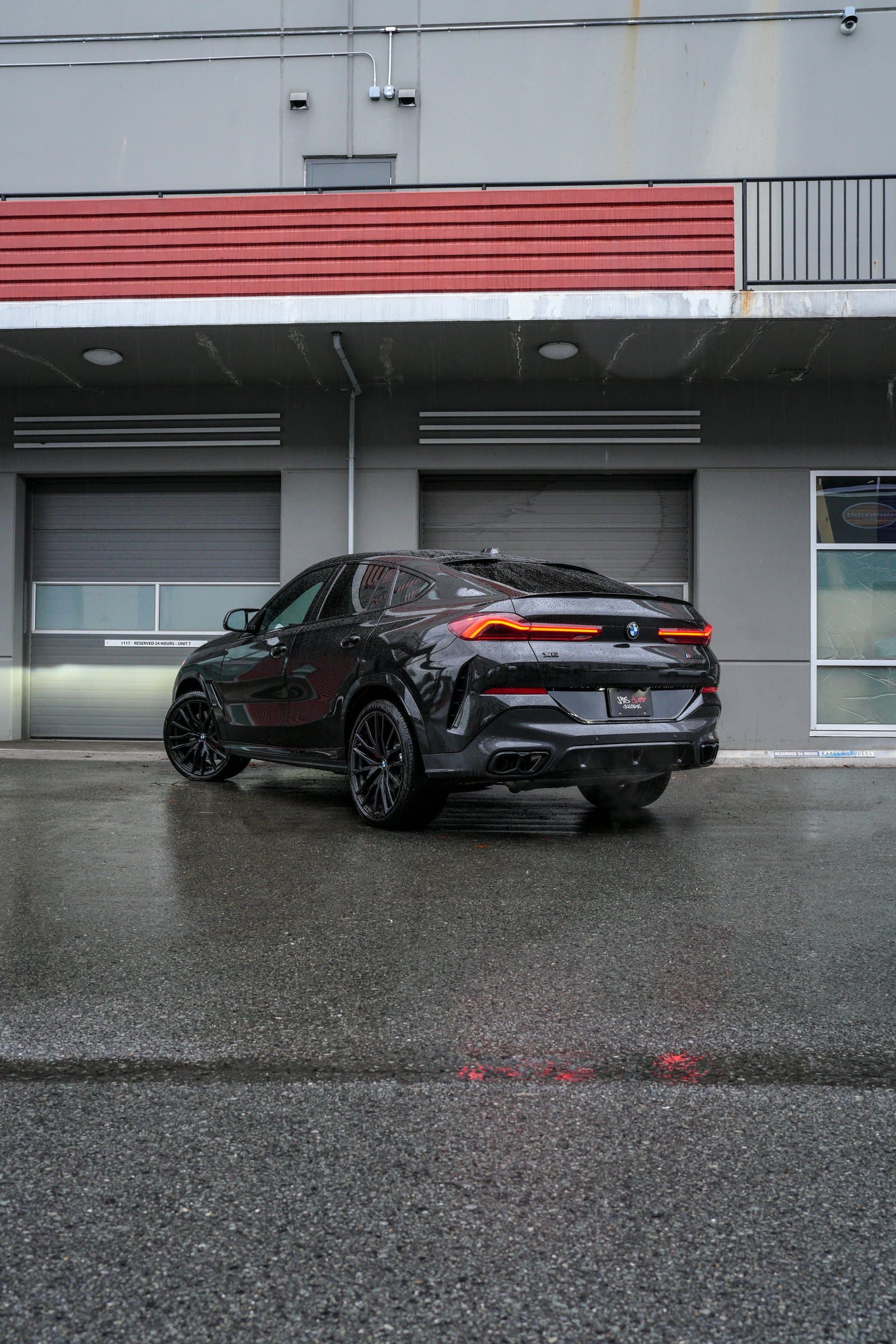
Film finish also dictates how noticeable a seam can be. Solid gloss colours and satin finishes hide tight overlaps remarkably well when the edge is sealed cleanly. Directional metallic, colour-shift, and brushed films require extra care so both the inlay and the main panel share the same flake orientation, a detail we check closely on builds like our BMW X6 M60i metallic black wrap before the vehicle leaves the bay.
Vancouver Weather, Washes, and Long-Term Care
Vancouver's climate tests every edge on a wrapped bumper. Weeks of steady rain push fine road grit into any lifted gap, while winter cold makes vinyl stiffer and less forgiving if a seam was left exposed facing forward. When overlaps face rearward or sit tucked inside a recessed lip, high-pressure spray from a self-serve wash wand glides over the seam instead of prying underneath it.
For owners who want impact resistance on top of a colour change—or who drive the Sea-to-Sky corridor regularly—pairing high-wear front zones with paint protection film adds a thicker urethane barrier against rock chips without sacrificing seam stability. Before choosing a wrap shop, ask where inlays will sit on your specific bumper; a shop that explains its seam map up front is building a wrap meant to stay down.
Related project: BMW X6 M60i — Metallic Black 3M Wrap