
Dry Carbon vs Wet Carbon: What Vancouver Owners Should Know
Published
Two words for the same material
When a shop quotes you for a carbon fibre splitter, mirror caps or a full body kit, the word carbon is doing a lot of work. It is a genuine composite — strands of carbon fibre woven into fabric, set in resin, and cured into a rigid panel that is stiffer than steel at a fraction of the weight. That much is the same for every carbon part you will ever buy. What changes between them is how that fabric gets turned into a shape, and JRS fits and sources carbon fibre aero components as part of its performance work so the difference in construction ends up being one of the larger decisions in a build.
There are two production methods, and they are called dry carbon and wet carbon. Neither is a marketing tier and neither is a quality judgement. They are different manufacturing processes with different material properties, different cost structures, and different behaviour once the car is on the road.
What wet carbon actually is
Wet carbon is the older and far more common process. Layers of woven carbon fabric are laid into a mould, resin is poured or infused over them, and the whole thing is cured under heat and pressure. Because the resin is still liquid when it goes into the mould, it fills every gap between the fibres and bonds them together in one piece. The panel comes out of the tool already finished and glossy, with the weave locked under the surface.
Wet carbon is what most carbon parts on the road are made from, and it is not a lesser material. It is also what makes large panels affordable. A front splitter, a set of side skirts, a bonnet — these are big shapes that need a big mould, and wet lay-up is the process that makes them at a sensible price.
The limitation is the resin content. In a wet lay-up the fibre volume fraction typically lands somewhere around fifty to sixty percent, because the resin has to be fluid enough to wet out the fabric before it cures. What that means in practice is that a wet carbon panel carries more resin than a dry one, and resin is heavy, stiff and brittle over time. It is also why a wet carbon panel can take a stone chip and crack rather than absorb the impact the way dry carbon does.
What dry carbon actually is
Dry carbon uses pre-impregnated sheets — prepreg — where the resin is already worked into the fabric in a controlled ratio before it ever enters the mould. The lay-up is done in a vacuum bag, and then the panel is cured in an autoclave: a sealed chamber that pressurises the bag while heating the part through the resin's full cure cycle.
The result is a panel with a much higher fibre content, typically around sixty percent or more. Less resin means less weight. It means the fibres carry more of the load, which is where carbon's real strength and stiffness come from. And because the fibres are doing the work rather than a block of resin, the panel handles impact differently: it tends to dent and stay bonded rather than spider-crack.
The practical consequence is that dry carbon is stiffer. That is the property that matters on a real car. A dry carbon splitter or roof panel holds its shape under the aerodynamic load it was designed for, where a wet part of the same shape can flex more and, over years, take a permanent set. On a car that lives on a motorway or on a rough road, a panel that does not flex and does not fatigue is the more durable one.
Why the process decides the price
This is where the two split commercially, and the difference is large rather than marginal. Dry carbon requires prepreg material, a vacuum bag, and an autoclave big enough to hold the part. Those are expensive pieces of equipment, and they are only worth running on parts where the material advantage justifies it. Wet lay-up needs a mould and a curing oven. Both are real manufacturing, but they are not the same investment.
That is why you will find dry carbon on the smaller, highly visible pieces — mirror caps, mirror frames, small trim elements, badges — and wet carbon on the large panels: bonnets, roof panels, splitters, side skirts, diffusers.
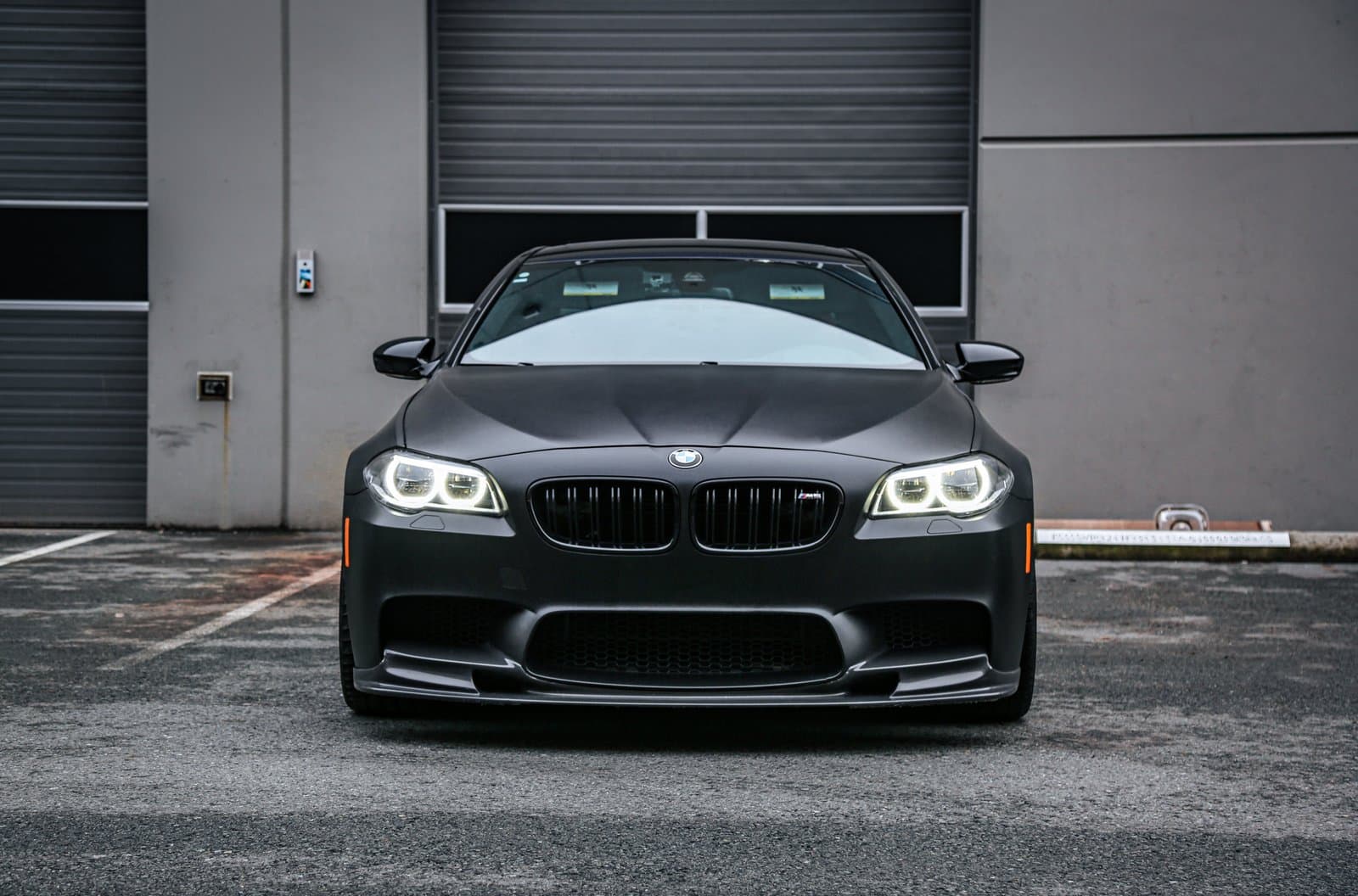
A full body kit is where this becomes a genuine budgeting question. The M5 in JRS's own portfolio went to a full 3DDesign carbon fibre body kit, and carbon fibre body kits are, panel for panel, the most expensive version of each component on the car.
What Vancouver does to the difference
The climate argument here is not about either material failing. Both hold up in coastal air, both survive road salt far better than painted panels, and both need the same care: a clean surface, protection applied where the weave is exposed, and no abrasive wheel brushes on a textured finish. Applying a coating to an exposed weave is straightforward — we do it as part of our ceramic coating service — the point is that protection helps both materials equally and does not change the construction choice underneath.
The Vancouver-specific point is narrower. A dry carbon panel is the one that will still be doing its job in fifteen years, and that matters for a car you are holding onto. A wet carbon panel that has taken a few stone chips on a logging road can end up with visible cracks in the resin, and cracked resin is a repair rather than a clean-up. If a car spends its life on gravel logging roads rather than commuting, that difference is worth more than most people expect when they order the parts.
The other consideration is that carbon panels get painted, wrapped or left raw, and that decision is made at order time, not in the driveway. If you are going to paint the parts to match the body — something our colour change and paint-matching work handles routinely — the construction difference matters less to how the car looks and matters more to how it ages. If you are keeping the weave exposed, as we covered separately for gloss and matte carbon, the weave itself is the finish, and the panel underneath it needs to be the one you trust to last.
Three questions that settle it
First, which panels are you actually changing. Mirror caps and trim are cheap to do in dry carbon and the material difference is visible in the weight of a part you are constantly looking at. A full body kit in dry carbon is a very different budget, and on a large panel the money may be better spent elsewhere on the build.
Second, how the car is used. A car that lives on the motorway, that carries a mountain road every weekend, or that sees gravel logging roads will put more load through a panel than a car that commutes and parks. That is the case where dry carbon's stiffness and impact behaviour are worth the premium.
Third, what happens if the part takes a hit. Wet carbon chips and cracks. Dry carbon dents and stays bonded. If you drive the car the way the build suggests you should, that difference is the one you will actually notice years later, not on the day it is fitted.
If you are weighing a specific build, the useful thing to bring is the panels you have in mind rather than a brand. We can tell you what is sensible to specify in dry carbon, what is better made wet, and where the money in the build earns more. We source and fit carbon fibre aero and trim components as part of our performance work, and we will respond within one business day with a timeline and any prep notes. Keeping the rest of the car protected while you decide is a separate question, and our paint protection film service and maintenance options are worth a conversation at the same time.
Related project: BMW M5 — 3DDesign Kit and Akrapovic Exhaust