
Tire Shine: What the Glossy Dressing Really Does to Rubber
Published
The Glossy Tire Look Is a Choice, Not a Default
Walk past any car show in Vancouver and you will see the same finish on the tires: black, glossy, almost wet. It photographs well, so it has become the default expectation for a car that has just been detailed. It is also a coating. Like any coating, it does something to the rubber underneath, and the effect is not always the one people are hoping for. There are two camps. One reaches for the wet-look product because a freshly dressed tire makes the whole car read as freshly detailed. The other would rather have a satin finish that makes the tire look clean without looking coated. Both are legitimate. The problem is that most owners pick one without knowing what is being applied, or without being told that some of the shinier products do lasting damage to the sidewall. This matters more in Vancouver than in a lot of places. Our winters put road salt down daily from roughly November through March, and spring brings months of grit, pollen, and construction dust. The sidewall is where all of that shows up, because it never touches the road.
What a Tire Dressing Actually Does to the Sidewall
A tire dressing is a product applied to the sidewall after the tires have been cleaned, and what it does depends almost entirely on what is in the bucket. The basic job is the same in every product: put a barrier over the rubber. It slows down ultraviolet light, which is what makes rubber go grey and chalky over the years, and it slows down the alkaline attack from road salt and wet road film. That part is straightforward and genuinely useful. The variable is the finish, and that is where the products split. A solvent-based gloss is the traditional option. The solvents dissolve and slightly swell the rubber surface, evening out the texture and giving that deep wet look. This is not a scare story about one application. It is a slow, cumulative thing that happens to the tires that get the glossiest treatment and the least maintenance. A water-based satin or matte protectant does the same barrier job without the aggressive solvent action. If you have had tire shine applied repeatedly and noticed chalky sidewalls, this is the more sensible default.
Why the Sidewall Ages Faster Than the Rest of the Tire
The tread is the part of the tire designed to meet the road. The sidewall is not. It is a flexible structural member that holds the tire together while flexing through every expansion joint and pothole, covered in rubber never designed to be the most durable thing on the car. That rubber ages for predictable reasons. Time and heat break down the polymers, ozone attacks the surface and creates the fine cracking you see on older tires, and UV light fades the black to grey. Unlike the tread, the sidewall has nothing rubbing against it, so dirt and salt simply sit there. Our guide to tire age and safety in Vancouver covers the replacement side, including the date codes and what they actually tell you.
Getting the Sidewall Clean Before You Dress It
Dressing a dirty sidewall is the most common mistake in this whole area, and it is why so many people conclude that tire shine does nothing. If road salt is baked into the texture, a dressing sprayed straight onto it will bond to the salt rather than to the rubber. It will look good for about a week, then start to lift and shed in patches, pulling dirt back with it as it goes. The sidewall needs to be genuinely clean first, which means more than a wipe with a wet cloth. Salt gets into the pores of the rubber and needs a degreaser or a dedicated tire cleaner with dwell time. A pumice stone works, and we would gently discourage it on newer tires, because the abrasion that removes the salt is also removing surface rubber. After cleaning, let the sidewall dry properly. Dressing a damp sidewall traps moisture against the rubber and produces the blotchy finish people often mistake for a bad product. Our full car detail process guide covers the order of operations, and why sidewall cleaning sits well before the dressing stage.
The Finishing Step: Chrome Polish and Tire Shine Together
The reason tire shine usually comes up alongside chrome polish is that both are finishing steps on the same job. They are the last thing that happens, after the wheels are clean, the tires are dressed, and the paint is corrected. Polishing the wheels before the tires are dressed means the overspray lands on a clean, dressed sidewall instead of a dusty one. This is exactly how we sequence it in our show-day preparation package, where a wash and decontamination is followed by a sealant boost, then tire shine and chrome polish together as the last stage. Doing the shiny work before the messier cleaning work means you clean over the polish rather than polish over the dirt. If you are having wheels refinished rather than just cleaned, that is a different job and it is covered in our alloy wheel refinishing guide. And if the tires are new, the timing question is a real one. It is worth reading our new tire break-in guide before you book, because a new sidewall is worth protecting from the moment it goes on.
Where Tire Care Fits With the Rest of the Car
Tire dressing sits in a larger system. A car with beautiful tires and neglected paint still looks unfinished. A car with corrected paint and chalky sidewalls still looks unfinished from the ground down. If you are working through a protection plan, the sensible sequence is usually paint protection first, then wheels and tires, then the finishing detail. Ceramic coating on the paint means the car stays easier to wash, which means the sidewalls get less road film and salt, which makes the dressing last longer. Our ceramic coating page covers that side of it. If you are choosing new wheels, our wheel colour guide is worth reading before you commit to a fitment. For a car used year-round rather than one prepared for a weekend, our tire service page covers the seasonal side, and our maintenance detailing page covers what a year-round service should include.
A Case Study: New Wheels and New Tires on a BMW X5
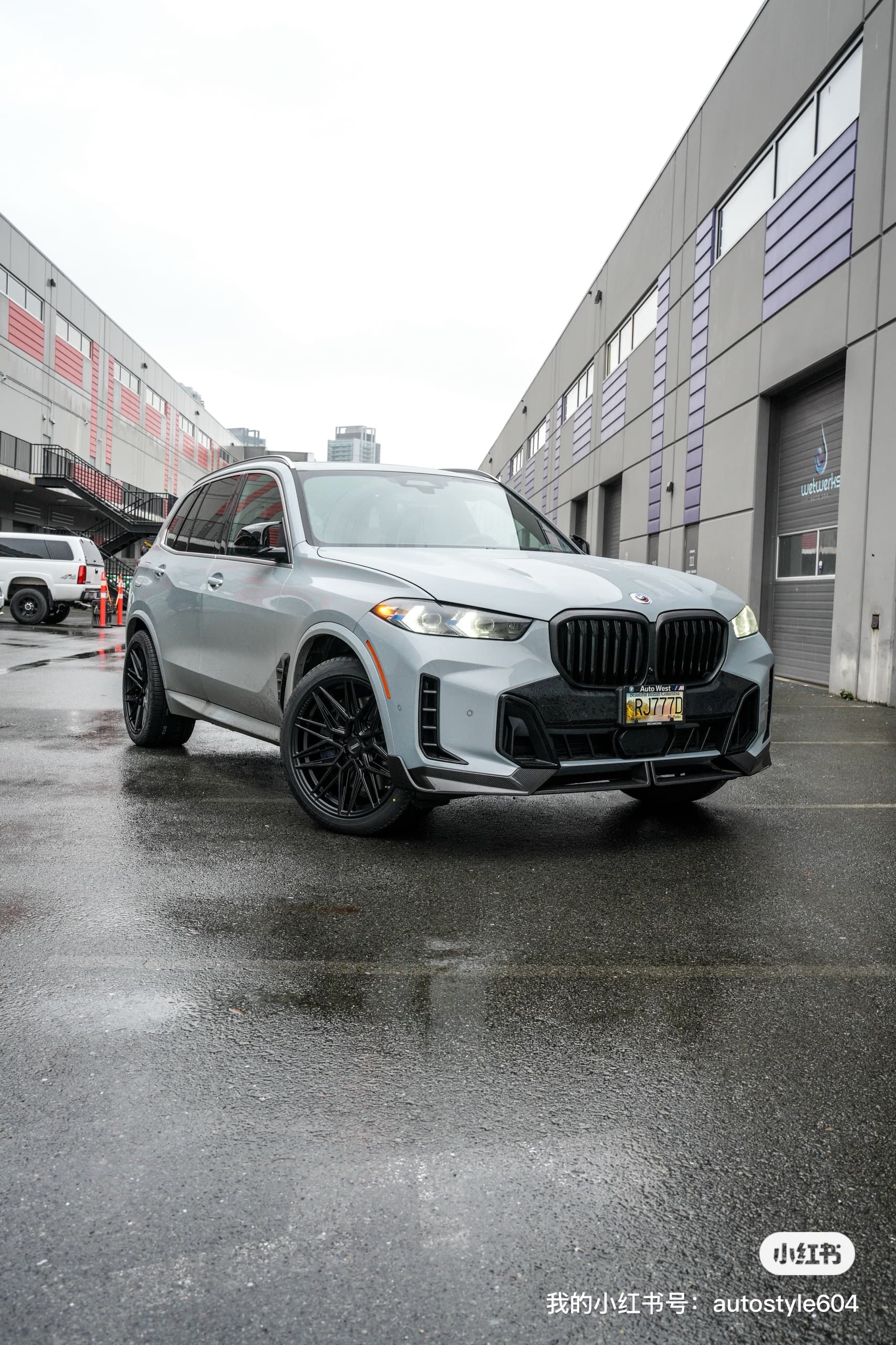
When a car gets new wheels and new tires at the same time, the tires arrive fresh out of the mould and the wheels arrive with whatever the previous owner left behind. That contrast is exactly what a finishing step is supposed to resolve. One of our recent projects was a BMW X5 upgraded with 21-inch Vossen HF-7 wheels paired with Pirelli All-Season tires. The point of that build was a clean, year-round setup that improved daily drivability without looking ostentatious, and the wheels and tires were handled as one job rather than two separate purchases. The lesson for tire care is that new rubber deserves the most attention of any sidewall you will ever own. It has no accumulated road film, no salt etching, and no dulling from years of dressing. Dressed properly from the start, it stays that way, and in five years that is the difference between a car that looks cared for and one that looks tired. You can see the result in our BMW X5 wheel and tire project. A second example makes the same point. On an Audi RS3 that moved down to 18-inch Neuspeed RSE10 wheels with a performance tire package, the change was about ride quality and reduced unsprung weight rather than looks alone. Those tires get used hard and put away wet, so they are where a sidewall protectant earns its keep.
What to Ask When You Book
If you want a specific result, ask in terms of the finish rather than the product. A shop that understands the question will talk you through the difference between a matte sidewall, a satin one, and a wet-look one, and tell you which suits how you drive. Four questions worth asking: what the product is, whether it is solvent-based or water-based, whether the sidewalls will be cleaned first, and whether the dressing is reapplied as part of a regular service. If you want a single service that covers paint, wheels, and tires together, our daily essential care page has the routine options, and the show-day package is the version of this conversation where the car is going somewhere.
Related project: BMW X5 | 21” Vossen HF-7 Wheels & Pirelli All-Season Tires | Vancouver BC